TOYOTA 89661-32330 Auto Engine Ecu Ecm Pcm Control Module 2.0
fits model: Camry. make: Toyota. year: 1989.
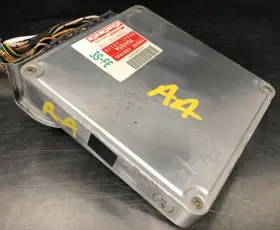
( Protection Lock: No ), ( Type: Engine Control Unit ), ( Memory: Eeprom ), ( Manufacturer Warranty: 1 Month ), ( Manufacturer Part Number: 89661-32330 ), ( Country Of Origin: Japan )
Review TOYOTA 2.0 Auto Engine Computer Ecu Ecm Pcm Control Module fits CAMRY 1989
The Toyota 89661-32330 is an engine control unit (ECU), also referred to as the powertrain control module (PCM) or electronic fuel injection (EFI) computer, specifically designed for 1989 Toyota Camry 2.0L automatic models. This crucial component is responsible for managing various engine functions, ensuring optimal performance and adherence to emission standards.
Measuring approximately 6 x 8 x 1 inches, this compact yet powerful module integrates advanced microprocessors and sensors to monitor and regulate engine functions in real-time. It controls the fuel injection system, ignition timing, idling speed, and emission systems, among other vital functions.
Constructed using high-quality materials and advanced engineering techniques, this ECU features robust connectors and reliable electrical contacts to ensure stable and consistent power delivery. Its robust design, combined with Toyota's proven engineering expertise, ensures long-lasting reliability and performance.
This module is equipped with an advanced self-diagnostic function, which constantly monitors its own operations and detects any potential issues. In case of a malfunction, the ECU can store error codes, making it easier for technicians to identify and resolve the issue.
The Toyota 89661-32330 ECU is designed to work seamlessly with 1989 Camry 2.0L automatic engines and requires no modifications for installation. It is a direct replacement for the original component, ensuring a hassle-free upgrade process.
In summary, the Toyota 89661-32330 1989 Camry 2.0L automatic engine ECU is an essential upgrade for vehicle owners seeking improved engine performance, enhanced reliability, and better fuel efficiency. Its advanced features, robust design, and easy installation make it an indispensable component for any Toyota Camry enthusiast.
Buying a Toyota 89661-32330 1989 Camry 2.0 auto engine ECU/ECM/PCM control module can be a consideration for those experiencing issues with their vehicle's engine control system. Below are some potential pros and cons to help in the decision-making process.
Pros:1. OEM (Original Equipment Manufacturer) part: This Toyota part is designed, manufactured, and tested by the vehicle original equipment manufacturer, ensuring compatibility and reliability.
2. Improved engine performance: A faulty control module can affect various engine functions such as fuel injection, ignition timing, and emissions control. By replacing it with a new one, you may notice improved engine performance and smoother operation.
3. Potential cost savings: DIY installation (if you have the necessary skills and tools) can save you labor costs. Additionally, reusing original parts tends to be less expensive in the long run than continuously replacing non-OEM components.
4. Warranty: OEM parts often come with a warranty, providing peace of mind and financial protection against potential future failures.
Cons:1. Cost: Replacing a control module can be a significant expense, especially when factoring in the cost of the part and any necessary labor.
2. Installation complexity: Installing a control module can be a challenging process, requiring specialized tools and knowledge. Hiring a professional mechanic may be necessary, adding to the overall cost.
3. Potential for additional issues: A faulty control module may be the symptom of a larger problem within the vehicle. Replacing the module without addressing the root cause could result in repeat issues.
Conclusion:Considering the pros and cons, purchasing a Toyota 89661-32330 1989 Camry 2.0 auto engine ECU/ECM/PCM control module can offer improved engine performance and long-term cost savings. However, the cost of the part and installation, as well as the potential for additional issues, should be carefully weighed against the potential benefits.
Recommendation:If you have the necessary skills and tools, opting for a DIY installation can save you labor costs. However, if you're unsure about the installation process or lack the required expertise, it's recommended to consult a professional mechanic for a proper assessment and installation. Additionally, ensure that the root cause of any engine control system issues is identified and addressed before replacing the control module to avoid repeat problems.
Details:
part #: 8966132330 prices
- $10.00-$71.95
specifications ecusrush:
- for models: Camry
- for makes: Toyota
- for years: 1989
- protection lock: No
- type: Engine Control Unit
- memory: Eeprom
- manufacturer warranty: 1 Month
- manufacturer part number: 89661-32330
- country of origin: Japan
general ecusrush:
- condition: Used
- Car Truck Parts Accessories > Starters, Alternators, ECUs Wiring > ECUs Computer Modules
returns ecusrush:
- time: 30 Days
- paid by: Buyer
- policy: Returns Accepted
payments ecusrush:
- credit card: Mastercard
- other
- wallet: Google-pay
shipping ecusrush:
- service: USPS Priority Mail
- type: Fixed
- cost: $11.99
- carrier: USPS
- class: Expedited
- transit: 2-6 Days
offer ecusrush:
- quantity: 1
- availability: In Stock
- sold: 0
- best offers: True
- options: Ship-to-home
- started: February 26, 2026
seller ecusrush:
- # reviews: 2036
- rating: 100.0%
- city: Albany, Oregon
Toyota 89661-32330 Is Similar To:
- Toyota 89661-47250 2007 2009 Prius 1.5l Engine Control Module Unit Ecm D54 039 (54.1% similar) Note: stock number: D54#039...(June 5th, 2024)
- Toyota 89661-0cg01 2010 Tundra 5.7l Ecm Engine Computer Module Ecu Pcm Blemish (54.1% similar) Sold as-is - visually inspected. Please verify fitment prior to purchasing. Removed from running vehicle...(June 6th, 2024)
- Toyota 89661-34170 95 T100 3.4l 5vz-fe At 4x2 Ecu Ecm Pcm Engine Computer 3158 (49.1% similar) Shipped with USPS ground advantage. 95 toyota T100 3.4L 5VZ-FE at 4X2 ecu ecm pcm engine computer 89661-34170 3158. Condition is used...(June 6th, 2024)
- Toyota 89661-60611 2003 Rav 4 2.0l Engine Computer Control Module Ecm Ecu Oem 8966160611 (61.5% similar) Part #: toyota 89661-60611 for sale...(June 7th, 2024)
- Toyota 28447011 2015 2016 Corolla 1.8 Engine Control Computer Module Ecm Ecu Oem (46% similar) This used item comes with a 30 day warranty parts only - no labor. This is a used item. The part was working 100% when removed from the donor vehicle...(June 7th, 2024)
- Toyota 89661-06f71 2008 Solara 3.3l Engine Computer Control Module Ecm Ecu Oem 8966106f71 (60% similar) Part #: toyota 89661-06F71 for sale...(June 7th, 2024)
- Toyota 89661-02f52 2009 2011 Corolla 1.8 Engine Control Module Unit Ecm L57 031 (51.3% similar) Note: stock number: L57#031...(June 9th, 2024)
- Toyota 896610x580 Engine Ecm Electronic Module Control 2.5l Fits 19 Camry (49.4% similar) Quality tested. Washed to remove excess dirt and grease. Warranty is for replacement of the part only and does not include any towing, labor, fluids, seals or gaskets. Warranty period begins on the day part is delivered. All parts must be installed to manufacturers specifications...(June 9th, 2024)
- Factory oem 89540-35270 2001 2002 Toyota 4runner Trc Vsc Abs Control Module Computer (40% similar) The part came out of a 2001 toyota 4 runner but may fit several to 2002 model's with the same number. Item was in good working order when removed. You are getting a used original factory abs TRX vac traction skid control computer module p/n 89540-35270. Please compare the provided part numbers and...(June 9th, 2024)
- Toyota 89990-47051 Oem Anti-theft Smark Key Control Module Prius 2010-2015 (40.8% similar) Oem anti-theft snark key control module toyota Prius 2010 -2015 / 89990-47051...(June 10th, 2024)
- Toyota 88650-47091 2010-2011 Prius Air Amplifier Assembly Module (42.8% similar) 2010 - 2011 toyota Prius air amplifier assembly module 88650-47091, year: make: model: body trim: engine transmission: 2011 TOYOTAPRIUSBASE1.8L l4 - electric/gas, 2010 TOYOTAPRIUSBASE1.8L electric/gas...(June 10th, 2024)

5 offers $10.00–$71.95 USD
- Used. Offer #1 priced at $10.00 + $5.62 delivery = $15.62* total. It was taken off of a running 1989 Camry 2.0l 3sfe Manual transmission. Unfortunately the original sticker got wiped off.+$5.62 shipping
- Used. Offer #2 priced at $50.98 + $0.00 delivery = $50.98* total. FREE SHIPPING
- Used. Offer #3 priced at $71.95 + $11.99 delivery = $83.94* total. +$11.99 shipping
- Used. Offer #4 priced at $35.00 + $0.00 delivery = $35.00* total. The part # is This is a good ecm or engine computer for a 1989 Toyota Camry.FREE SHIPPING
- Used. Offer #5 priced at $15.00 + $5.62 delivery = $20.62* total. Taken from a running car.+$5.62 shipping