HONDA 37820-PVJ-A91 Ecm Engine Control Module Pcm 3.5L
fits model: Awd, Pilot. make: Honda. year: 2008.
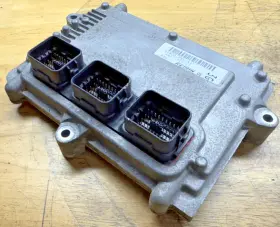
( Materials Sourced From: United States ), ( Protection Lock: No ), ( Programming Required: Yes ), ( Terminal Type: Pin ), ( Manufacturer Part Number: 37820-PVJ-A91 ), ( Material: Aluminum, Plastic ), ( Placement On Vehicle: Front ), ( Type: Engine Control Unit ), ( Manufacturer Warranty: 1 Month ), ( Features: Corrosion Protection, Easy Installation, Fast Microprocessor, Optimal Durability )
Review HONDA 3.5l Ecm Engine Control Module Computer Pcm fits PILOT AWD 2008
The Honda 37820- Pavj-A91 engine control module, also known as the Powertrain Control Module (PCM), is an essential component of the 2008 Honda Pilot 3.5L AWD's engine system. This PCM is designed to regulate and manage various engine functions to ensure optimal performance, fuel efficiency, and emissions compliance.
The Honda 37820- Pavj-A91 PCM is a sophisticated electronic device that communicates with other engine and vehicle systems through a complex network of sensors, actuators, and wiring harnesses. Its primary function is to receive input from these sensors, process the data, and generate appropriate outputs to control various engine functions, including fuel injection, ignition timing, and emissions control.
This PCM is specifically designed for use in the 2008 Honda Pilot 3.5L AWD with all-wheel drive (AWD) systems. It features advanced diagnostic capabilities that allow it to monitor engine operating conditions in real-time and detect any potential issues or faults. When a fault is detected, the PCM stores the relevant diagnostic trouble codes (DTCs) and illuminates the check engine light on the dashboard.
The Honda 37820- Pavj-A91 PCM is a robust and reliable component, designed to withstand the rigors of daily use. It is housed in a compact, waterproof casing to protect it from environmental contaminants. The PCM also features built-in temperature sensors and voltage regulators to maintain optimal operating conditions.
Installation of the Honda 37820- Pavj-A91 PCM is a complex process that requires specialized tools and knowledge. It is recommended that the replacement of this component be performed by a qualified technician to ensure proper installation and functionality.
In conclusion, the Honda 37820- Pavj-A91 engine control module is a crucial component of the 2008 Honda Pilot 3.5L AWD's engine system. Its advanced diagnostic capabilities and ability to manage various engine functions make it an essential part of ensuring optimal performance, fuel efficiency, and emissions compliance. However, its installation requires specialized knowledge and tools, making it a job best left to a qualified technician.
Buying a Honda 37820- Pavj-A91 2008 Pilot 3.5L AWD ECM Engine Control Module (PCM) can be a consideration for those experiencing issues with their vehicle's engine management system. Here are some pros and cons that may help in making an informed decision.
Pros:1. OEM Part: This is an original equipment manufacturer (OEM) part, meaning it is designed and manufactured by Honda for their specific vehicle model and year. This ensures compatibility and reliability.
2. Improved Performance: A faulty PCM can lead to various engine performance issues. Replacing it with a new one can help restore optimal engine performance.
3. Potential Savings: DIY installation or using a less expensive repair shop can result in cost savings compared to dealership prices.
4. Peace of Mind: A new PCM will eliminate any potential issues related to the old one, providing peace of mind for the vehicle owner.
Cons:1. Cost: Replacing a PCM can be an expensive repair, especially when factoring in the cost of labor if using a repair shop.
2. Complex Installation: The installation process can be complex and time-consuming, requiring advanced knowledge and tools. This may make it a daunting task for some vehicle owners.
3. Potential for Additional Issues: A new PCM may not resolve all engine-related issues, as other components could also be contributing to the problem.
Ending Conclusion:The decision to buy a Honda 37820- Pavj-A91 2008 Pilot 3.5L AWD ECM Engine Control Module (PCM) depends on several factors, including the severity and frequency of the symptoms, the vehicle owner's technical expertise, and their budget. If the vehicle is essential for daily use and the symptoms are severe, it may be worth considering a dealership repair. However, for those with technical know-how and a budget for the parts and tools, a DIY installation can result in significant cost savings. Ultimately, it is essential to weigh the pros and cons and make an informed decision based on individual circumstances.
Recommendation:Before making a purchase, it is recommended to gather as much information as possible about the specific issue and the replacement process. Consulting online forums, repair manuals, and seeking advice from experienced mechanics can help in making an informed decision. Additionally, considering the availability and cost of the part from various sources, such as dealerships, local repair shops, and online retailers, can help in finding the best deal.
Details:
Please verify fitment prior to purchasing. Sold As-Is - visually inspected. Removed from running vehicle.
part #: 37820pvja91 prices
- $35.00-$85.00
specifications ecusrush:
- for models: Awd, Pilot
- for makes: Honda
- for years: 2008
- materials sourced from: United States
- protection lock: No
- programming required: Yes
- terminal type: Pin
- manufacturer part number: 37820-PVJ-A91
- material: Aluminum, Plastic
- placement on vehicle: Front
- type: Engine Control Unit
- manufacturer warranty: 1 Month
- features: Corrosion Protection, Easy Installation, Fast Microprocessor, Optimal Durability
shipping ecusrush:
- cost: $0.00
- transit: 3-5 Days
- service: UPS Ground, USPS Ground Advantage, UPS 2nd Day Air
- carrier: UPS, USPS
- type: Fixed
- class: Standard, Expedited
seller ecusrush:
- city: Fort Myers, Florida
- # reviews: 872
- rating: 100.0%
returns ecusrush:
- paid by: Seller
- time: 30 Days
- policy: Returns Accepted
general ecusrush:
- Car Truck Parts Accessories > Starters, Alternators, ECUs Wiring > ECUs Computer Modules
- condition: Used
payments ecusrush:
- other
- wallet: Apple-pay
- credit card: Diners-club
offer ecusrush:
- sold: 0
- quantity: 1
- availability: In Stock
- best offers: True
- started: November 14, 2025
- options: Ship-to-home
Honda 37820-PVJ-A91 Is Similar To:
- Honda 39200-t3m-a61 Control Unit Active Noise Accord 2016 2015 2014 2013 (38.7% similar) Fitment type: direct replacement. Brand: honda. Control unit, active noise 39200-T3M-A61 honda accord 2016 2015 2014 2013 : in stock. Conditions options: used. Any questions or concerns please feel free. Manufacturer part number: 39200-T3M-A61. Genuine oem: yes. Condition: used...(June 7th, 2024)
- Honda 37820-5ba-l87 2016-17 Civic 2.0l Ecm Engine Computer Control Module Pcm (65.8% similar) Sold as-is - visually inspected. Other compatible p/n: 37820-5BA-L85, 37820-5BA-L86, 37820-5BA-L83, 37820-5BA-L82, 37820-5BA-L84, 37820-5BA-L81. Please verify fitment prior to purchasing. Removed from running vehicle/engine...(June 10th, 2024)
- Honda A2c53319906 2018 19 20 Accord Body Control Computer Module Bcm Bcu Oem 38800tvaa420m1 (45% similar) This is a used item. This used item comes with a 30 day warranty parts only - no labor. The part was working 100% when removed from the donor vehicle...(June 10th, 2024)
- Oem Honda 36048-ph4-688 1989 Accord Ecm Ecu Engine Control Module Part 36048-ph4-668 (54% similar) Originally pulled working from a 1989 honda accord. Buy this honda ecu/ecm unit to replace your flaky ecu...(June 11th, 2024)
- Honda 37820-r1j-a54 2014 2015 Civic Engine Control Module Computer Ecm Ecu 37820r1ja54 (68.3% similar) This item comes with a 30 day warranty...(June 11th, 2024)
- Honda 37820r5aa56 2013 2014 Crv Engine Computer Control Module Oem Ecm (60.8% similar) This used item comes with a 30 day warranty parts only - no labor...(June 14th, 2024)
- Honda 37820-r1j-a64 14 15 Civic 1.8l Engine Control Module Computer Ecm Ecu 37820r1ja64 Oem (63.9% similar) This used item comes with a 30 day warranty parts only - no labor. The part was working 100% when removed from the donor vehicle...(June 15th, 2024)
- Honda 37820-5a0-b25 2016 2017 Accord Engine Computer Control Module Oem Ecm (61.4% similar) This used item comes with a 30 day warranty parts only - no labor...(June 17th, 2024)
- Honda 39980-szt-a41 Cr-z Crz 12 Eps Unit Module B025 Oem 2012 (38.8% similar) Honda cr-z Cruz 12 EPS unit module 39980-AZT-A41, B025, oem, 2012 , this item fits: 2012 Cruz, other part number: part placement on vehicle: condition: used item, refer to images for condition. May have wear and tear, color: images: all images are of the actual item. God bless you...(June 18th, 2024)
- Honda 37820-6b2-a72 2020 Accord 2.0l Engine Computer Control Module Ecm Ecu 378206b2a72 Oem (55.6% similar) This used item comes with a 30 day warranty parts only - no labor. The part was working 100% when removed from the donor vehicle...(June 23rd, 2024)
- Honda 591-11314 Chassis Ecm On Transmission Turbo Awd Fits 17-19 Cr-v (32.7% similar) It is required that you re-seal transmission and engine oil pans. Transfer case. Small parcel shipping ups/FedEx: free shipping on all small parcel orders. The torque converter must be properly seated and aligned to the front pump. Verify and check fluid type, levels, viscosity...(June 24th, 2024)

5 offers $35.00–$85.00 USD
- Used. Offer #1 priced at $35.00 + $0.00 delivery = $35.00* total. This is a good ecm or engine computer for a 2008 Honda Pilot.FREE SHIPPING
- Used. Offer #2 priced at $85.00 + $0.00 delivery = $85.00* total. HOW DID WE DO?.FREE SHIPPING
- Used. Offer #3 priced at $71.98 + $11.95 delivery = $83.93* total. +$11.95 shipping
- Used. Offer #4 priced at $70.98 + $15.00 delivery = $85.98* total. This ECM is essential for the proper functioning of the engine in a Honda Pilot from the year 2008. The 2008 Honda Pilot Computer Brain Engine Control ECU ECM EBX Module is a crucial part for controlling the engine in a Honda vehicle.+$15.00 shipping
- Used. Offer #5 priced at $20.00 + $11.25 delivery = $31.25* total. Item was removed from a 2008 Pilot.+$11.25 shipping